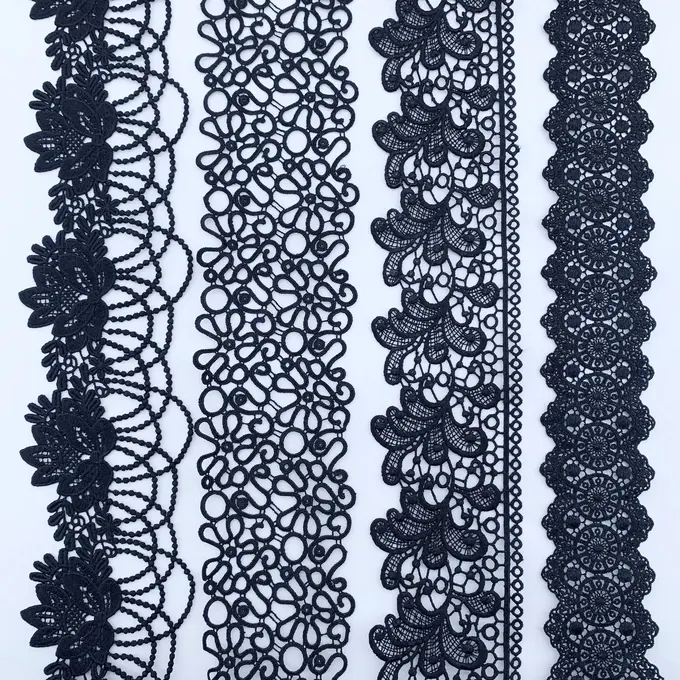
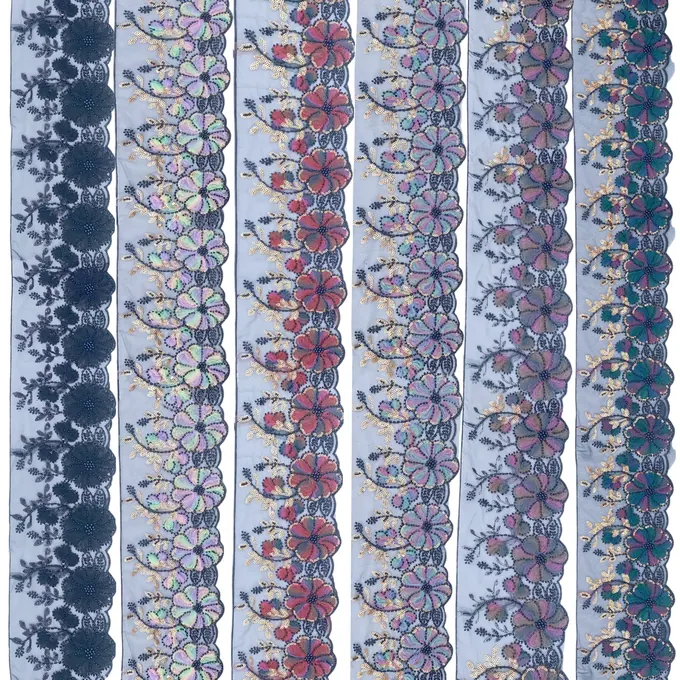
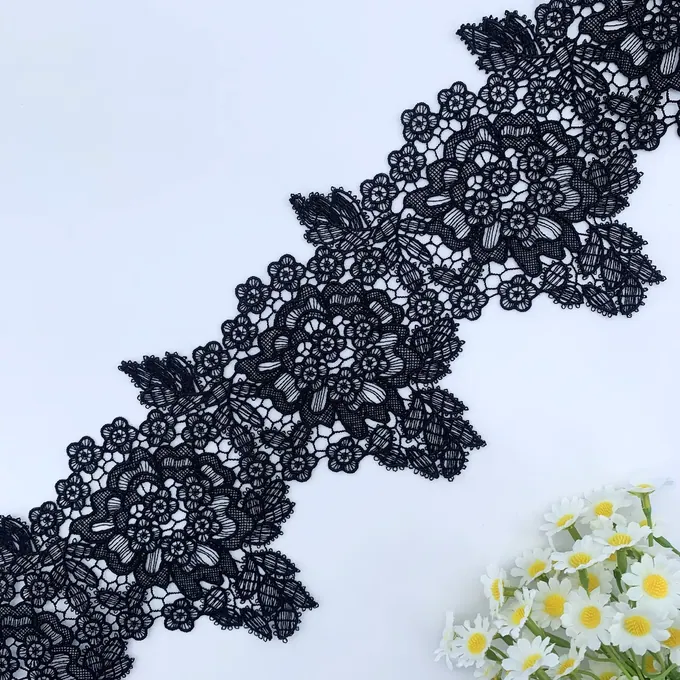
Draw the full opening
A long front border needs to be planned as one visible line. Mark its start near the neckline, its end at the hem and every fastening it passes. Check the closed garment as well as the open version. Decoration that looks balanced on a flat sleeve sample may cover a button, pull across an overlap or interrupt the front edge on a full-length abaya.
Choose how both sides relate
Decide whether both sides use the same motif direction, a mirrored arrangement or deliberately different placements. Ask for a photograph of sufficient continuous trim to judge the repeat. A small isolated flower does not show how stems connect along the border. Avoid promising a mirrored result until the actual trim and garment layout have been checked together.
Place joins before ordering
Measure each uninterrupted run separately. If a roll includes joins, ask how they are marked and whether a full front can be cut from one section. Hide a join only where your sample confirms an acceptable result. A neckline corner, a prominent flower or the centre front may make even a neat join visible. Record which positions cannot contain a join.
Specify the border as a garment component
Send the chosen reference with a simple annotated sketch, length per side and number of garments. Add the desired backing visibility, fastening method and sample request. Compare embroidered and lace borders by the finished appearance on your cloth, then ask Middle East Trims to confirm the exact variant, quantity unit and continuity needed for the quotation.
- Length of each uninterrupted front run.
- Fastenings, overlap and prohibited join positions.
- Direction and alignment of both borders.
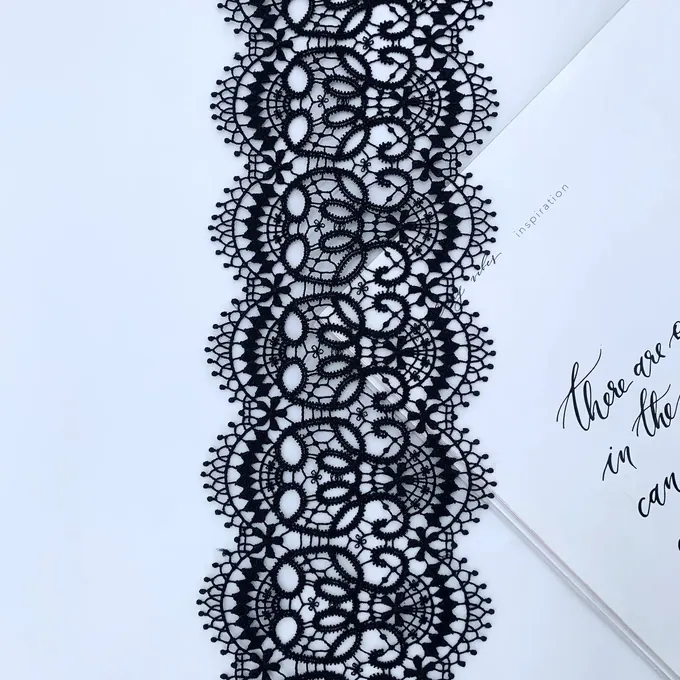
A real catalogue example. Confirm its suitability, dimensions and performance separately.
Turn your research into a clear enquiry.
Select your designs and share the colour, quantity, unit and destination. Request confirmed specifications before ordering.
Prepare an enquiryRequest samples