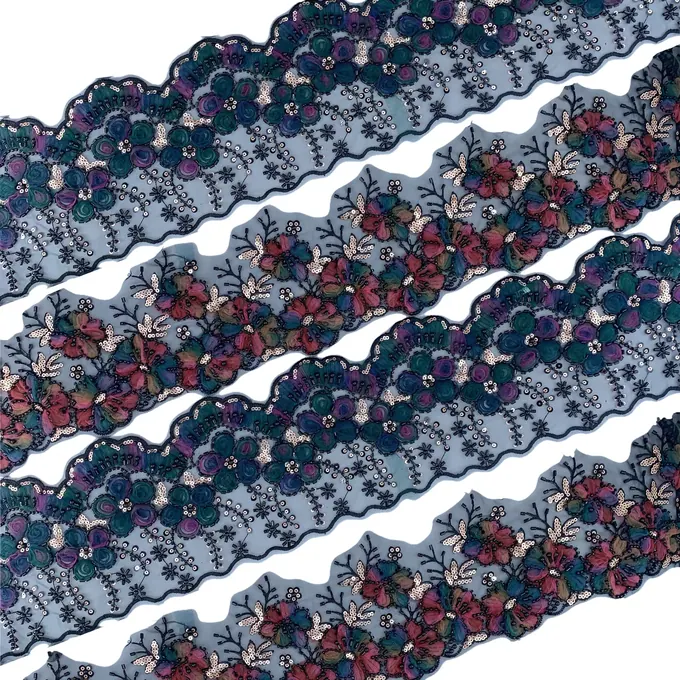
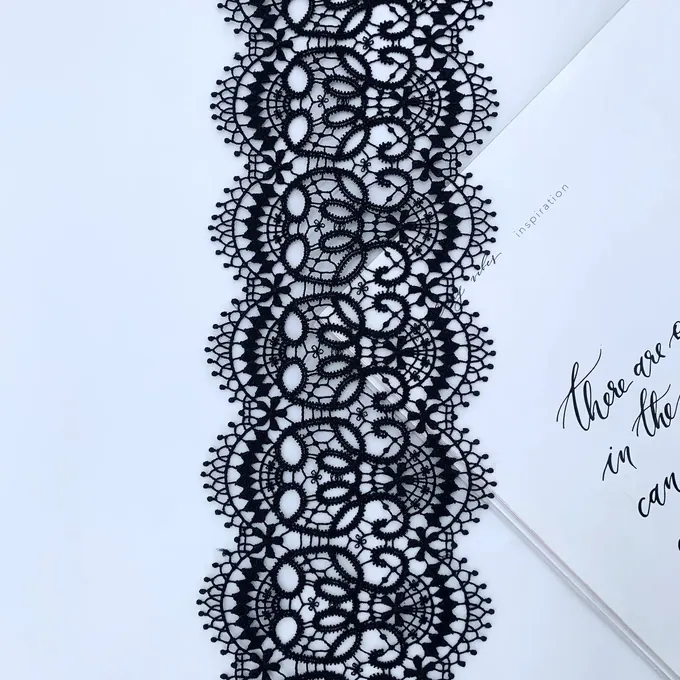
Mark the moving parts
On the garment drawing, show the zip slider path, buttoning area or other closure movement rather than drawing only a closed seam. Mark any overlap and the fabric that folds back during opening. A motif beside the closed fastening can extend into its moving path. The clearance decision therefore needs both the closure and decoration present on the sample.
Try the complete opening action
Have the garment team operate the fastening through its intended range with the sample in the worn position. Observe the trim edge, projecting beads and folded backing. Check both opening and closing, then inspect the reverse for loose sections. This practical review does not establish a universal minimum gap; the result applies to that fastening, placement and construction.
Record where decoration may stop
If the arrangement interferes, compare moving the border, ending it earlier or choosing a less projecting candidate. Show the accepted start and stop points on the pattern. Do not ask the cutter to remove individual beads from an unassessed product to make room. Any change to the supplied construction needs separate feasibility and sample confirmation.
Keep the closure version with the trim approval
Send the trim reference and marked closure view when requesting samples. Identify the version of the fastening used in the trial and record the accepted arrangement. If the closure size or position changes later, revisit the check before releasing production. A previous trim approval cannot describe a fastening combination that was never reviewed.
- Closure movement and overlapping fabric mapped.
- Opening and closing checked with decoration attached.
- Accepted clearance tied to a specific closure version.
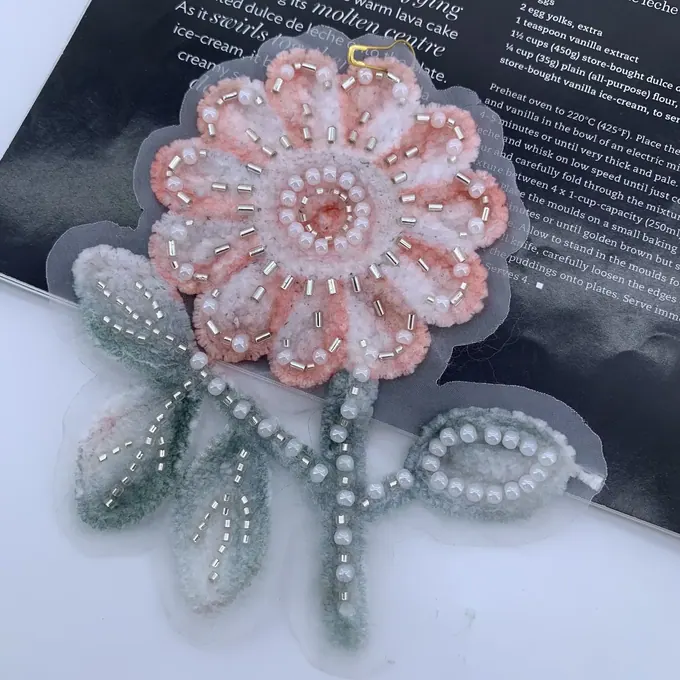
A real catalogue example. Confirm its suitability, dimensions and performance separately.
Turn your research into a clear enquiry.
Select your designs and share the colour, quantity, unit and destination. Request confirmed specifications before ordering.
Prepare an enquiryRequest samples