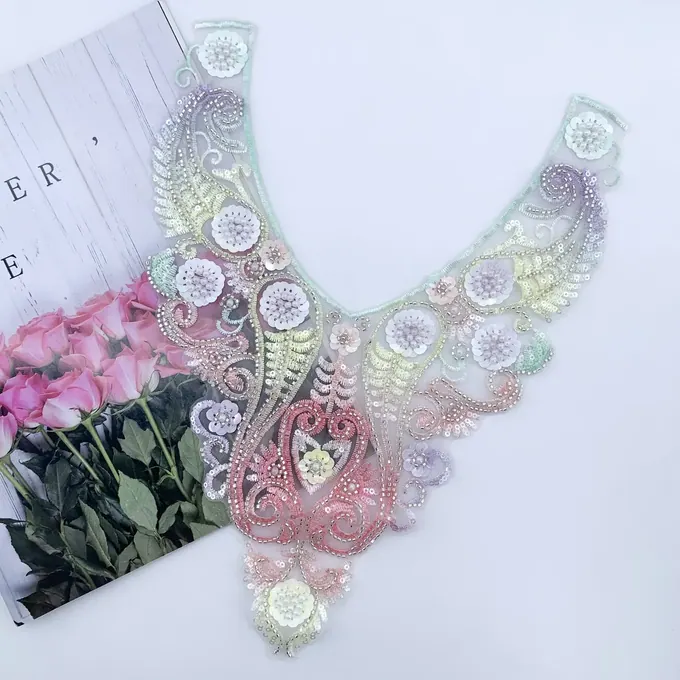
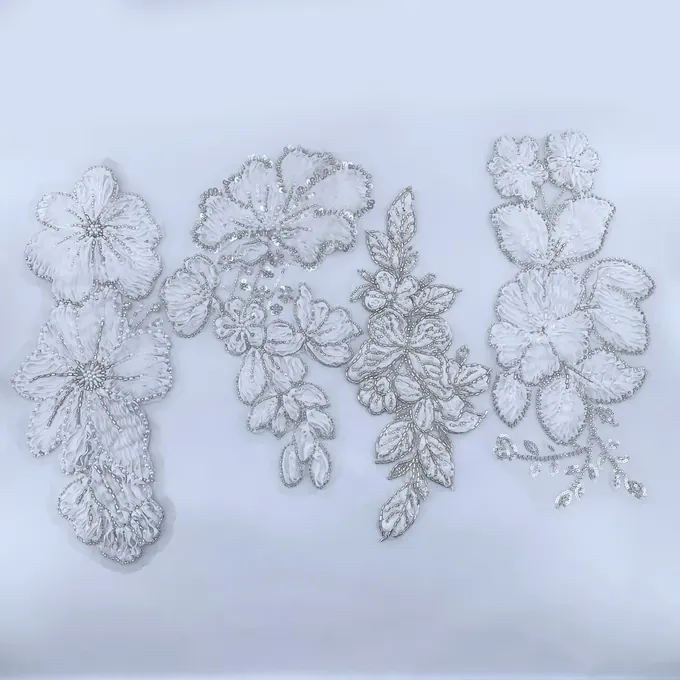
Map the shoulder from front to back
A shoulder decoration wraps over a curved area, so its flat outline is only a starting point. Mark the shoulder seam, neckline and sleeve head on a dress form. Position the appliqué where it will be stitched, then photograph the front, side and back. Check how much of the piece remains visible from each angle and whether it bridges an area that must move.
Try arm movement before approving shape
Use a basted sample to test raising and lowering the arm. Watch the sleeve head and neckline for pulling, and look for lifted tips when the wearer returns to rest. The sewing team should decide where support or additional attachment is needed. Do not assume a decorative piece is self-supporting or suitable for the sleeve merely because the outline resembles a shoulder.
Define one piece, a pair or an asymmetrical layout
For a symmetrical dress, compare both shoulder pieces together and record the viewing direction. Turning a left piece over can expose its reverse rather than create a usable right piece. For an asymmetrical design, show the intended side explicitly. Confirm how many usable pieces are supplied per sales unit and distinguish decorative symmetry from identical measurements or construction.
Share a marked placement photograph
Choose a catalogue reference and attach the placement image when you open the WhatsApp conversation. Include the garment cloth, maximum footprint and pieces needed per dress. Request a physical sample for attachment and comfort checks. Ask for confirmed composition and care information for the chosen variant; the photograph alone does not establish suitability for delicate or unlined garments.
- Front, side and back placement views.
- Arm movement and secure attachment points.
- Usable left/right pieces per sales unit.
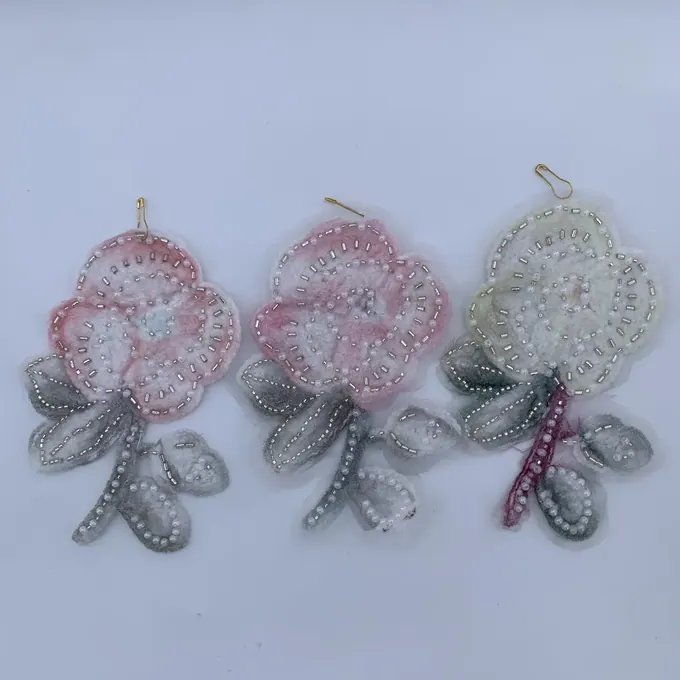
A real catalogue example. Confirm its suitability, dimensions and performance separately.
Turn your research into a clear enquiry.
Select your designs and share the colour, quantity, unit and destination. Request confirmed specifications before ordering.
Prepare an enquiryRequest samples