Define the viewing direction
Left and right can mean the wearer's side or the viewer's side. Put the pieces on a front-view garment sketch and label the convention before asking for a pair. Include an arrow showing the top of the garment. This avoids a correct-looking supplier photograph being interpreted in the opposite direction by the buyer or sewing team.
Distinguish turning from mirroring
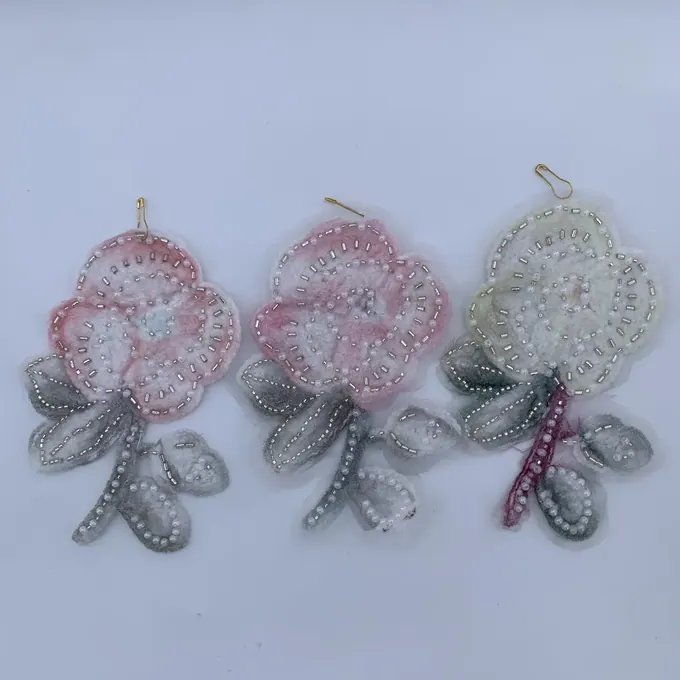
Rotate a sample while keeping its decorative face visible and compare the resulting motif direction. Then inspect the reverse separately. Turning a piece over does not establish a usable mirror image; it may simply show attachment threads or backing. For a true mirrored layout, request a photograph of both proposed pieces face-up and side by side rather than a digitally flipped product image.
Count usable pieces per garment
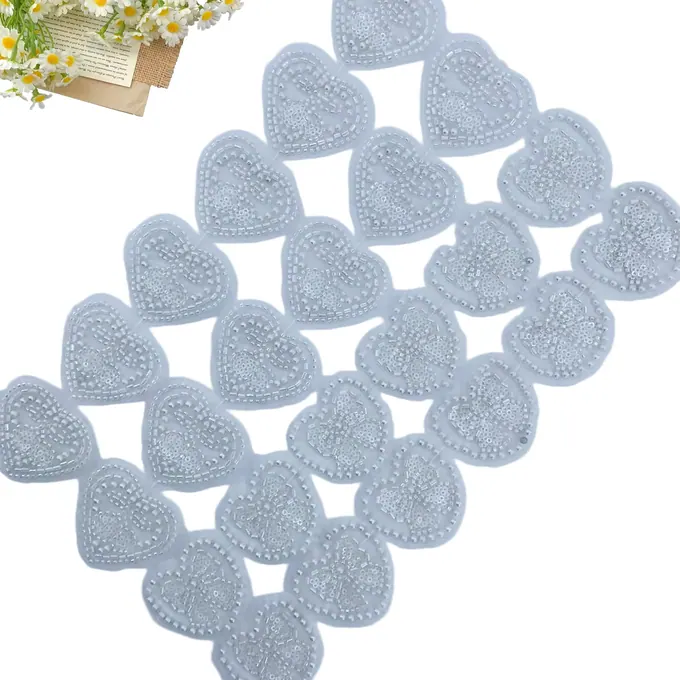
Write the requirement as one left plus one right, two identical pieces, or one specified asymmetric piece. Keep the sales unit separate from the garment requirement. If a supplier uses pair or set, ask what that unit physically contains. Check spare quantities by side too: several extra left pieces do not replace a missing right piece in a symmetrical design.
Keep the approved layout with the order
Send the catalogue reference, selected variant and labelled sketch through the enquiry workflow. Ask for sample confirmation of the face, direction and quantities. Save the approved image with the order version used by the sewing team. If a substitute is offered later, repeat this check; similar motif outlines do not guarantee the same orientation or usable pair composition.
- Wearer or viewer convention, with top arrow.
- Face-up photograph of both proposed pieces.
- Quantity and reserve by direction.
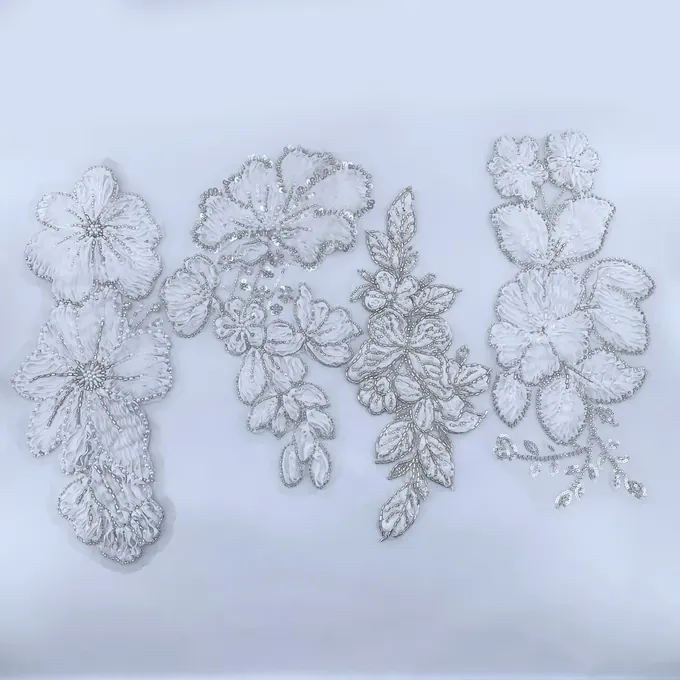
A real catalogue example. Confirm its suitability, dimensions and performance separately.
Turn your research into a clear enquiry.
Select your designs and share the colour, quantity, unit and destination. Request confirmed specifications before ordering.
Prepare an enquiryRequest samples