Measure the finished cuff
Start with the sleeve pattern rather than the width of a catalogue photograph. Mark the seam line, sleeve opening and intended visible edge. Measure around the finished cuff and record whether the trim sits flat, extends past the cloth or is inserted into a seam. Two equally wide trims can leave different amounts of decoration visible after sewing.
Try the movement that matters
Make one cuff sample on the intended fabric. Ask the wearer to bend the wrist, reach forward and put on an outer layer. Check the underside against the skin and the position of any raised decoration near the hand. A photograph cannot establish softness or snag resistance; keep written observations from this trial with the selected reference.
Cut the left and right sides together
Lay out both cuffs before cutting. Decide whether a flower should sit at the outer wrist or at the sleeve seam, then check the motif repeat against both positions. Rotating a directional border may turn a flower upside down. Allow for the actual cutting layout and ask whether the required length can be supplied continuously, rather than adding an arbitrary wastage percentage.
Send a cuff-specific enquiry
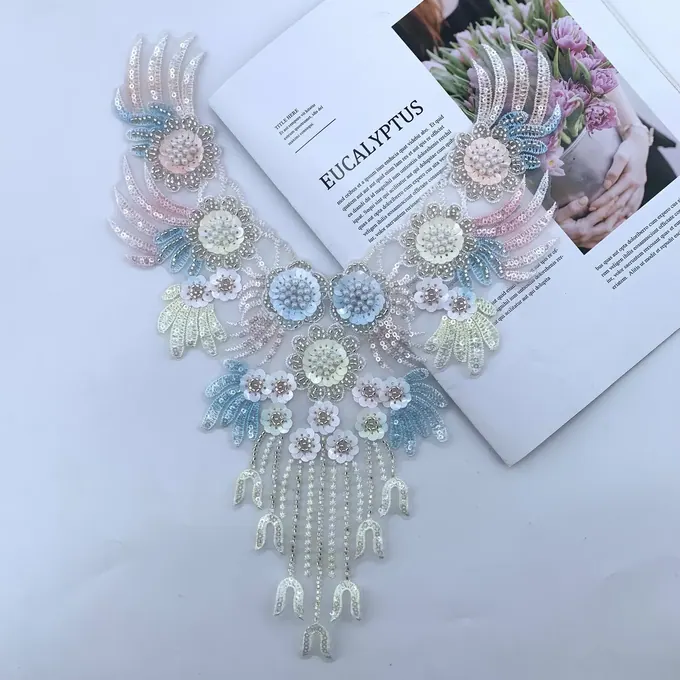
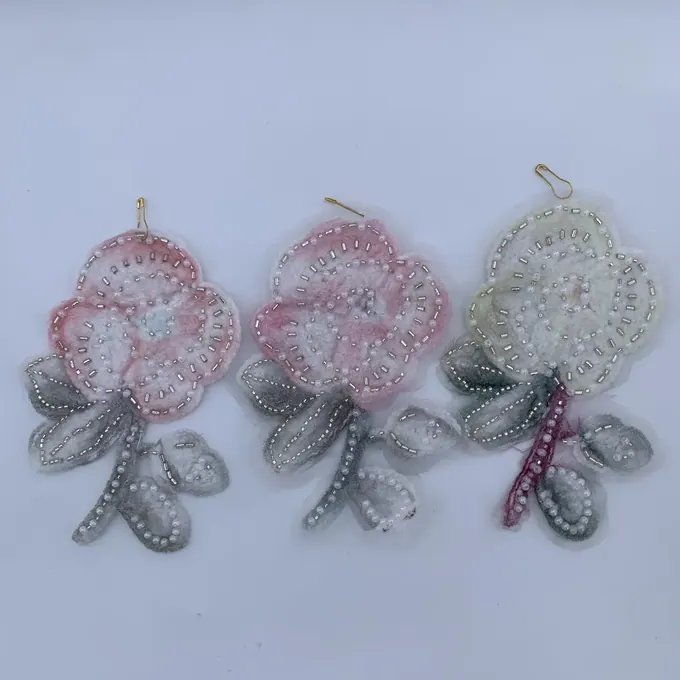
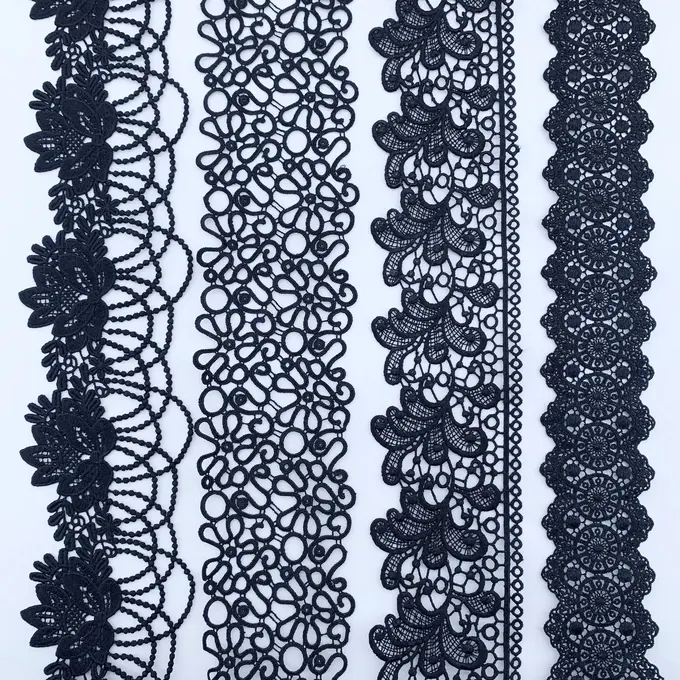
Shortlist lace and beaded borders in the catalogue, save the exact image and add each reference to your enquiry list. State the number of garments, cuff circumference, visible width and the location of the join. Request a sample quotation and confirmation of the sales unit. A pair of cuffs is a garment requirement, not necessarily the supplier's selling unit.
- Finished circumference and visible width.
- Left/right layout and motif direction.
- Seam position, sample fabric and required quantity.
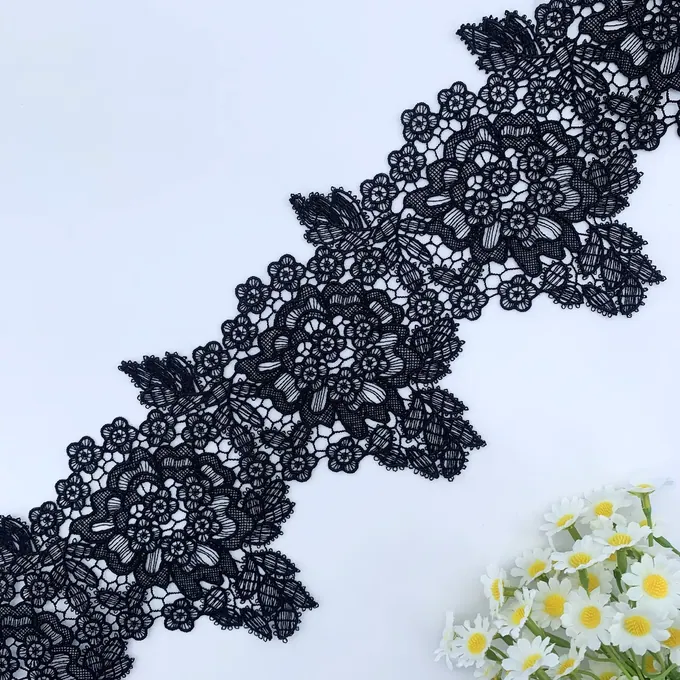
A real catalogue example. Confirm its suitability, dimensions and performance separately.
Turn your research into a clear enquiry.
Select your designs and share the colour, quantity, unit and destination. Request confirmed specifications before ordering.
Prepare an enquiryRequest samples