Treat the neckline as a shaped component
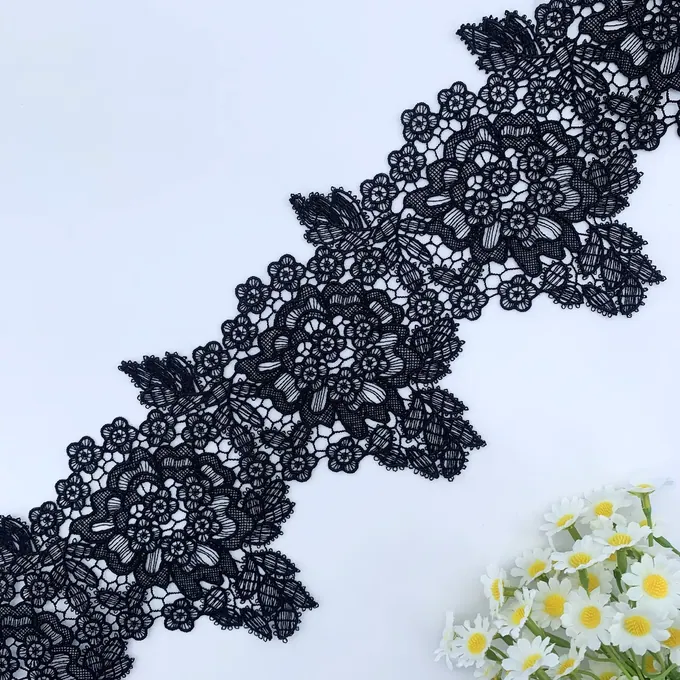
A decorative neckline may be a complete shaped piece, a pair of sections or a motif arranged to resemble a collar. Before selecting a style, establish which form the product actually takes. A flat product photograph does not show how it will sit around a neck or over a shoulder. Begin with a garment drawing and decide whether the decoration frames the opening, extends onto the chest or continues along a front fastening.
The buying brief should distinguish decoration from garment structure. Some pieces are intended to be sewn onto a supporting fabric rather than forming a wearable opening by themselves. Ask the supplier about the actual construction and intended attachment. Keep the base garment pattern as the fitting reference. A ready-shaped embellishment should be evaluated against that pattern, instead of expecting the garment neckline to match an unmeasured catalogue piece.
Request the measurements that control fit
Overall width and height are useful, but they are not enough for a shaped neckline. Request the inner opening width, front drop and shoulder span where relevant. Identify the points used for each measurement on a labelled photograph. For an open front, show the gap between the two sides and the planned overlap or fastening. Ask whether dimensions include exposed mesh, embroidered edges or any extra material reserved for attachment.
Use a paper outline at actual size to test the proportions on the pattern, followed by a physical sample for the final trial. Do not stretch a non-stretch piece to make it follow a different curve. Check left and right symmetry and how the design sits on different garment sizes. If several sizes are planned, decide whether one decoration can be repositioned or whether distinct dimensions need to be discussed with the supplier.
Check comfort, support and sewing access
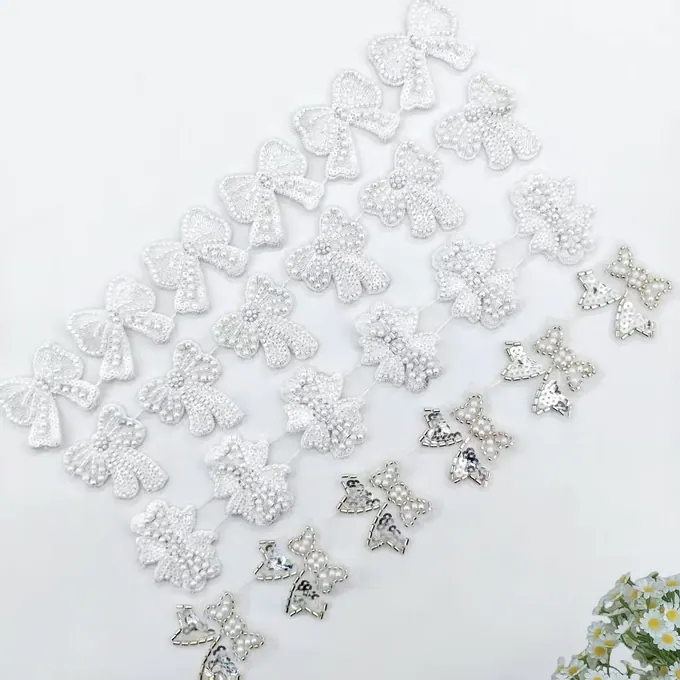
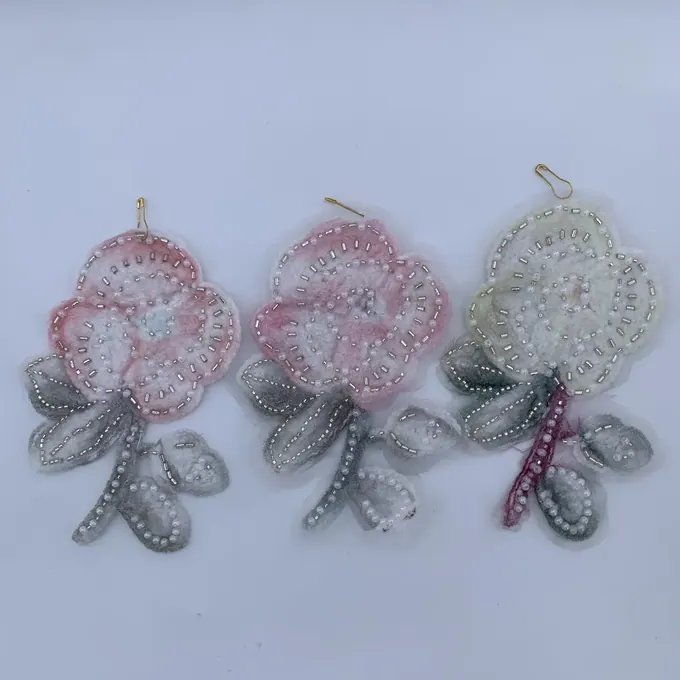
Inspect the reverse as carefully as the decorated face. Raised beads and long bugle shapes near the neck require a practical check against the intended lining and edge finish. Assess the sample with the garment maker and confirm how it will be supported. The aim is to understand the complete assembly, including any backing or lining, rather than judging comfort from the soft appearance of a front photograph.
Mark a safe stitching route and confirm the seam allowance available around the inner and outer edges. Discuss how loose mesh will be trimmed and how cut ends will be secured. Ask the supplier for composition and care information before any pressing, steaming or cleaning trial. A garment fabric that tolerates heat does not establish the same tolerance for its embroidery, coatings, beads or backing. Test an agreed method on a spare sample.
Send a neckline enquiry with a fitting reference
Label each neckline with a product reference, colour and required number of pieces or sets. Attach the garment drawing, key measurements and intended placement. State whether you are checking an existing catalogue shape or asking about a change. A request for custom dimensions is a feasibility question, so confirm available options, sampling conditions, minimum quantities and timing with the supplier before committing to a collection launch date.
Browse the necklines and appliqués collections at Middle East Trims, then use the sample request page to share your shortlist. Include destination and quantity per colour so the discussion covers both fitting and purchasing needs. Keep the approved sample together with the final measurement drawing. This creates a clearer reference for reorders than a screenshot alone and helps the cutting, sewing and buying teams work from the same specification.
- Complete neckline, separate sides or a multi-piece set.
- Inner opening, front drop, shoulder span and outer dimensions.
- Labelled measurement photograph and garment placement drawing.
- Backing, lining, seam space, attachment and care confirmation.
- Reference, colour, quantity, sample need and destination.
Turn your research into a clear enquiry.
Select your designs and share the colour, quantity, unit and destination. Request confirmed specifications before ordering.
Prepare an enquiryRequest samples