Say whether you need a match, an adaptation or a new design
A photograph alone can lead to very different interpretations. One buyer may want to find an existing product with a similar look; another may need a new width, different colours or a completely new motif. State the purpose at the beginning of your enquiry. Identify which details are essential and which may change. If you are asking about a catalogue item, include its reference so the supplier can distinguish a stock-style enquiry from a development request.
Use your own drawings, samples or references that you have permission to share and use. A reference image should describe the desired direction without implying a right to reproduce another brand’s protected design. Ask the supplier whether your brief is feasible and what additional information is needed. Sending an image does not establish that a product can be made, that the materials are available or that any particular price can be achieved.
Provide a dimensioned brief, not only inspiration
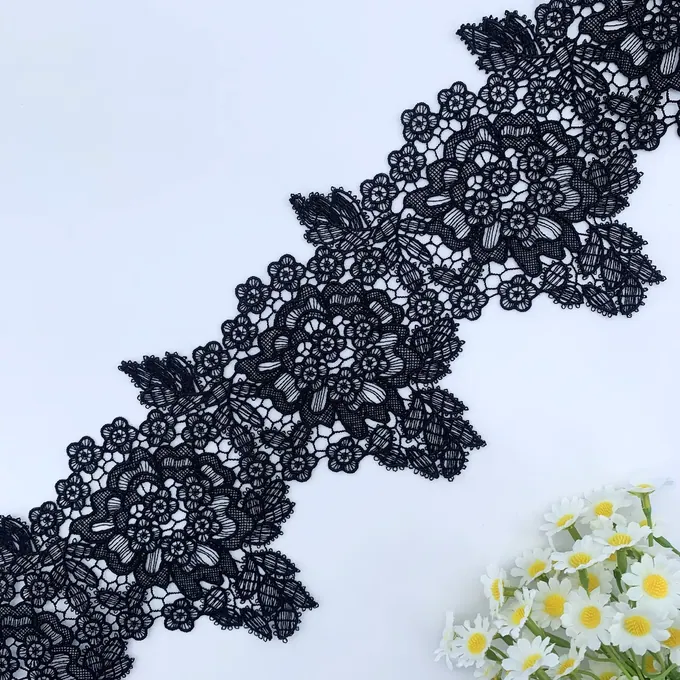
For a continuous border, include overall width, decorated width, repeat length and direction. For an appliqué, include maximum dimensions, whether it is single or paired, and left and right orientation as worn. For a neckline, add inner opening, front drop and placement on the garment. A simple labelled drawing is often clearer than many unmarked photographs. State the unit beside each number and identify any dimensions that are still provisional.
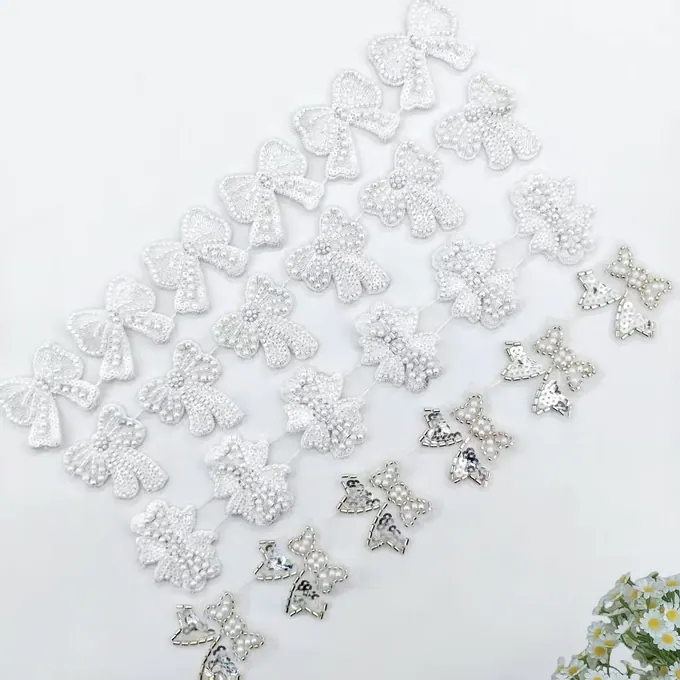
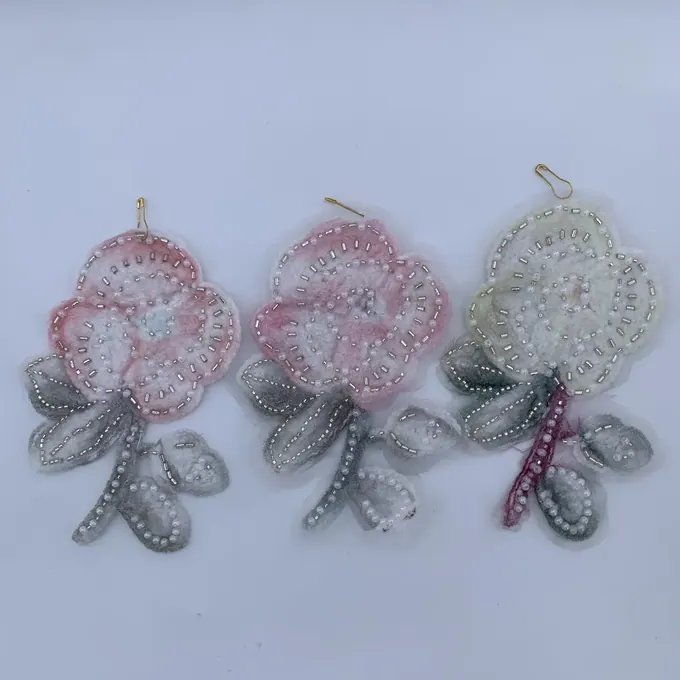
Describe the visible components separately: thread, mesh, beads, bugle shapes, sequins or raised flowers. If you require a specific composition, state it as a requirement to be confirmed rather than a guess based on appearance. Attach a base-fabric reference and explain whether the decoration must blend with it or contrast. Identify the desired finish, such as matte or reflective, while allowing the supplier to explain what can be specified reliably.
Explain the purchasing and approval plan
State the intended garment use, expected quantity per colour, selling unit and delivery destination. If the order may grow later, distinguish the first requested quantity from a possible forecast. Explain whether you need a drawing review, physical sample, sewing trial or another approval step. Ask about sampling charges, minimum quantities and development conditions. These details vary by supplier and product, so a generic custom label does not provide the answer.
Provide the date you need the material and explain whether it is a sampling or bulk-delivery requirement. Ask the supplier to confirm a realistic sequence before planning your garment launch around it. Discuss how changes after approval would affect the brief and quotation. If testing, labelling or documentation is required by your buyer or destination, state it early and request evidence relevant to the actual proposed product rather than relying on general claims.
Send one organised brief and keep the agreed version
Name each reference and place the related photographs, dimensions and questions together. A short summary should make it possible to understand the request without searching through a long message history. When options are discussed, mark which one is being reviewed. After an approval or change, update the brief and retain the agreed drawing or sample reference. This reduces ambiguity when buying and sewing teams later need to check the same detail.
Use the contact page at Middle East Trims to share your enquiry, or start by selecting nearby references from our embroidered trims, beaded trims and appliqués collections. We can discuss the information required for a product enquiry; any custom option must be reviewed for feasibility and confirmed terms. Include your preferred contact method and destination, and ask for clarification wherever the catalogue does not answer a technical or purchasing question.
- Existing reference, adaptation request or new authorised artwork.
- Labelled dimensions, direction, components and base-fabric reference.
- Colour, finish and essential versus flexible requirements.
- Quantity per colour, unit, destination and required date.
- Sample approval plan, documentation needs and supplier-confirmed feasibility.
Turn your research into a clear enquiry.
Select your designs and share the colour, quantity, unit and destination. Request confirmed specifications before ordering.
Prepare an enquiryRequest samples