Agree on the measurement before comparing numbers
Two width labels can describe different parts of the same trim. One supplier may measure from mesh edge to mesh edge, while your sewing team needs the visible embroidered section after attachment. Write down which dimension you need instead of sending only a number. Use centimetres or millimetres for widths and small motifs, and make the unit visible beside every measurement. Never treat an unclear folder name or image filename as a verified specification.
Lay the sample flat on a clean surface without pulling it into shape. Position a ruler close to the area being measured and take the photograph from directly above where practical. Avoid using an angled photograph as a precise size reference, because perspective changes the apparent proportions. Include the product reference in the image or accompanying note so that the measurement cannot be confused with another similar design.
Measure borders across the width and along the pattern
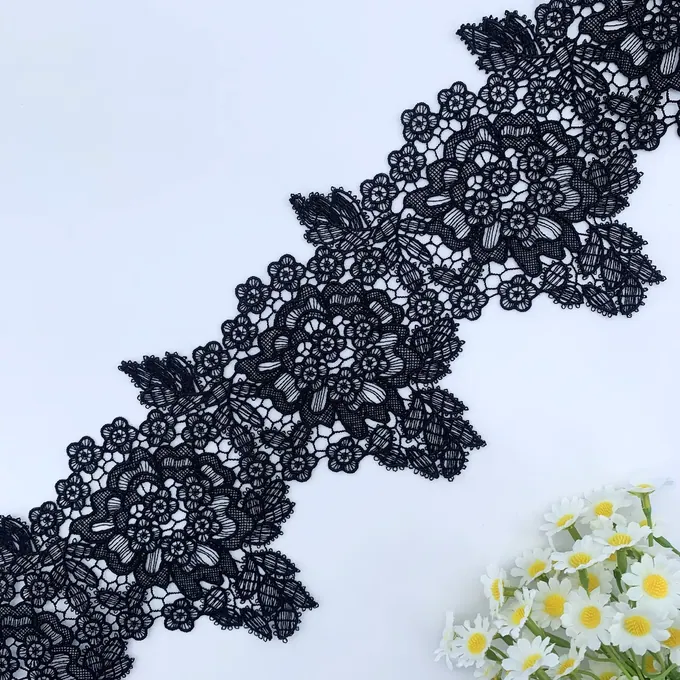
For a straight border, record overall width and decorated width separately. For a scalloped edge, record the widest projection and the narrowest part if both affect placement. Note which edge is intended to sit inside a seam. A narrow backing margin may be useful for sewing but should not be mistaken for visible decoration. Ask the supplier to confirm any working tolerance rather than assuming every section has identical width.
Measure one complete pattern repeat along the length, from an identifiable point to the same point on the next motif. Photograph the start and end markers. For an asymmetrical design, indicate the direction and whether a mirrored counterpart exists. Repeat length affects where flowers sit on paired sleeves and front panels, so it belongs in the cutting calculation. A short sample without a complete motif may not answer this question.
Describe shaped pieces with more than a bounding box
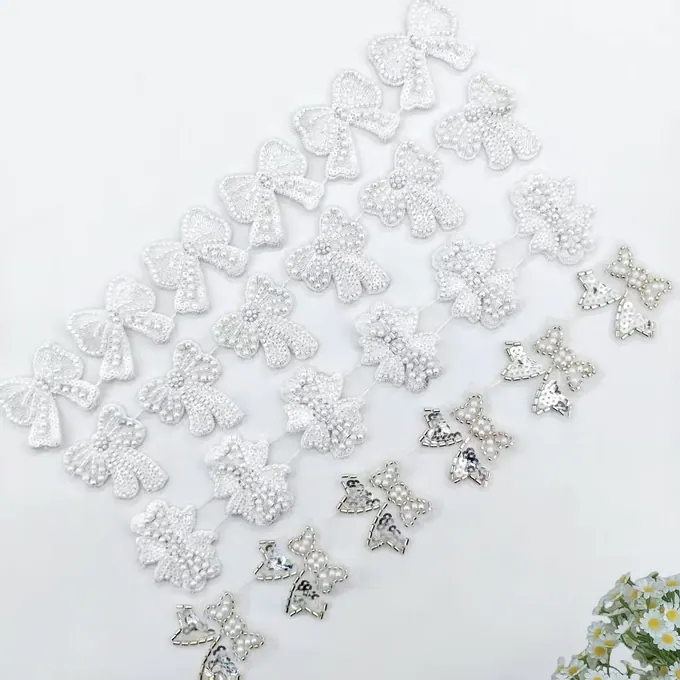
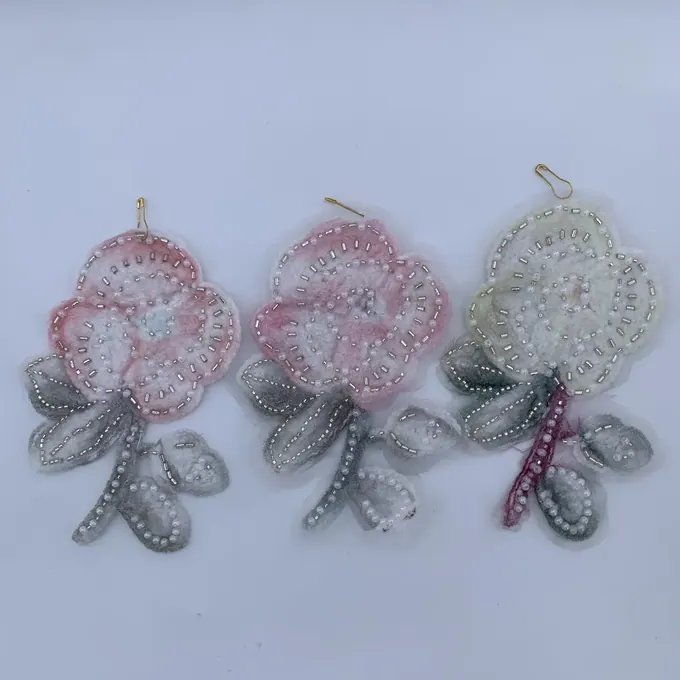
For an appliqué, maximum height and width provide a useful bounding box. State whether you measured the mesh or the embroidered outline, and measure each side of a pair if the shapes differ. If long stems extend beyond the main flower, include them in the overall size and mark their position. For raised or layered pieces, also request a side view so the garment maker can understand the relief.
A neckline needs additional points, such as inner opening, front drop and shoulder span. Use a simple labelled drawing rather than an unmarked string of dimensions. For an elastic or flexible trim, record whether the stated measurement is relaxed or taken under an agreed extension. Do not assign a stretch percentage from appearance alone. The supplier and sewing team should agree the method before that value becomes part of the approved specification.
Keep a measurement record with your sample
A useful measurement sheet includes the reference, colour, date, unit and annotated photographs. Add the person or team who checked the sample and any measurement questions still open. When a supplier revises a drawing or confirms a dimension, keep the latest agreed version with the physical sample. This is especially helpful when a buyer, designer and sewing workshop are working in different locations and need to discuss the same component.
Use the lace trims, appliqués and necklines collections at Middle East Trims to build a shortlist. If a dimension is missing, send the reference through our contact page and explain the points you need measured. Include the garment placement and desired visible size. Ask for confirmation before calculating a bulk order, particularly when the catalogue photograph has no ruler or when the product will follow a shaped seam.
- Product reference, colour, date and measurement unit.
- Overall width, decorated width and any backing allowance.
- Repeat length, direction and maximum motif dimensions.
- Labelled inner dimensions for necklines or curved shapes.
- Relaxed or agreed measurement condition and supplier-confirmed tolerance.
Turn your research into a clear enquiry.
Select your designs and share the colour, quantity, unit and destination. Request confirmed specifications before ordering.
Prepare an enquiryRequest samples